On March 30, a tweet by Kimberly Congdon, a comedian in Los Angeles in the US, generated more than 100 000 retweets. “Not to brag, but what a time to be childless,” the Comedy Central participant tweeted. It’s a sentiment that’s hard to counter. With the world already buckling under the pressures of the climate crisis and global inequality, the Covid-19 coronavirus came in, fists swinging, and did a number on the world’s optimism. As of April 28, there were more than 3 million Covid-19 cases and 200 000-plus deaths reported worldwide. A third of the world is under lockdown and life as we knew it may well have staggered to a complete stop. Add to that the grim declaration that “the pandemic is far from over” by World Health Organisation director-general Tedros Adhanom Ghebreyesus, and it’s not hard to feel like we’re living in a Lynchian nightmare.
If there is a future, it seems distant and vague. “I’m not optimistic,” deadpans David Benatar, the head of philosophy at the University of Cape Town (UCT). “Humans are predictable. I wrote a paper in 2007 about the avian influenza outbreak and the inevitability of a similar pandemic. The conditions that motivated my writing are the same ones that have gotten us where we are today. It’s only a matter of time before this happens again.”
Benatar (53) is an academic of rare vintage. Not much biographical information about him exists online other than his birthdate, his published works and a handful of interviews he’s done over the years. A fierce recluse, Benatar seems happy with publishing ideas and then retreating to the fringes of public discourse while the rest of us wrestle under the shadow of their long implications. In 2006, he published Better Never to Have Been, a book that argues against creating children.
“While good people go to great lengths to spare their children from suffering, few of them seem to notice that the one (and only) guaranteed way to prevent all the suffering of their children is not to bring those children into existence in the first place,” Benatar writes in the book’s opening pages. It’s a philosophy he would later expand on in The Human Predicament, a 211-page book in which he presents his argument about life’s meaninglessness and why we’d all be better off not existing. “Even in good health, much of every day is spent in discomfort. Within hours, we become thirsty and hungry. Many millions of people are chronically hungry. When we can access food and beverage and thus succeed in warding off hunger and thirst for a while, we then come to feel the discomfort of distended bladders and bowels,” he writes.
Then there’s the matter of disease, psychological trauma and crime, and their potential long-lasting physical and psychological effects on the victim. Add all of these together and it is not only dangerous but potentially unethical to bring any life into the world. “The broad idea is that the harms of existence outweigh the benefits,” he tells me over Skype. “So, if you tally up the net harms of existence – the physical and psychological discomforts that come with it – the bad always outweighs the good. Even in the absence of Covid-19, humans do, and will continue to, suffer.”
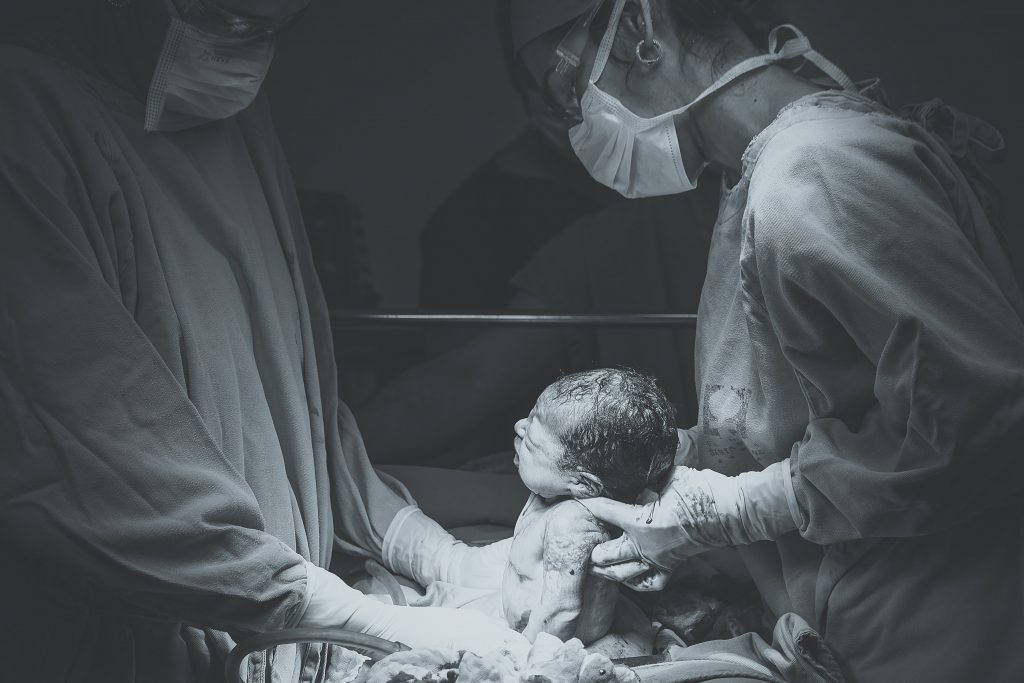
THE SIN OF BEING A PARENT
Antinatalism – the term used to describe the professor’s worldview – is not an intellectual property exclusive to Benatar. Long before Better Never to Have Been questioned the ethics of reproduction, thinkers such as Norwegian philosopher Peter Wessel Zapffe (1899–1990) and French writer Emil Cioran (1911–1995) were arguing that it was morally untenable to create new lives. What separates Benatar is how quickly his philosophy is gaining currency in mainstream television and on the fringes of the internet. In 2014, cable network HBO’s True Detective introduced the world to Rustin Cohle: a hard-boiled, chain-smoking detective whose pessimistic worldviews were modelled on Benatar’s beliefs. In one arresting scene, Cohle – now a retired detective – speaks of his daughter’s death and the unmistakable relief that later enveloped him.
“I think about my daughter now, and what she was spared. Sometimes I feel grateful. The doctor said she didn’t feel a thing, went straight into a coma. Then, somewhere in that blackness, she slipped off into another, deeper kind. Isn’t that a beautiful way to go out, painlessly as a happy child? Trouble with dying later is you’ve already grown up. The damage is done. It’s too late. You got kids? I think of the hubris it must take, to yank a soul out of nonexistence into this meat; a force of life into this thresher. As to my daughter, she spared me the sin of being a father.” It’s a statement that’s both arresting and completely alien to most of modern society’s firmly held beliefs about parenthood. Parenthood is often viewed as an accepted fact of adulthood and, maybe more philosophically, a means of surviving the grave. Surnames are passed through the act of parenthood. Societies and the human race are kept alive through the act of having babies. And, for the traditionally inclined, the inheritances of royalty are passed from parents to children.
This article was originally published by City Press under the headline “Want to save the world? Stop reproducing.”. You can read the full article here.